



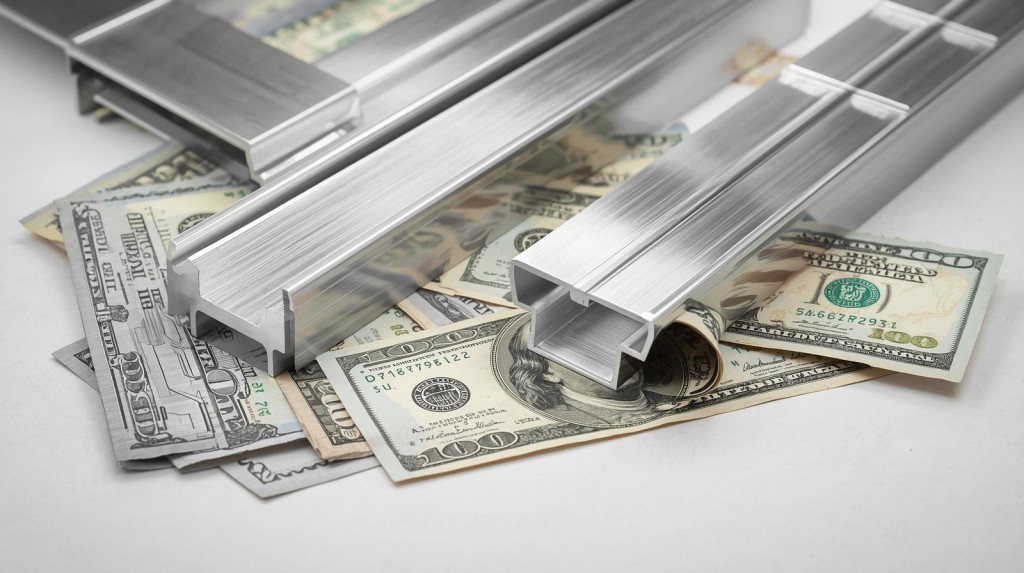
When it comes to home renovation or a new construction project, budget planning is just as critical as the design itself. Aluminium systems, an indispensable element of modern architecture, represent a long-term investment. However, when researching "2026 aluminium window prices," consumers often encounter a wide disparity in quotes. So, why might you receive a 20,000 TL quote from one firm and a 35,000 TL quote from another for the same project?
In this guide, we transparently address the technical details that determine the "aluminium fenestration price per m⊃2;," analyze market averages, and explain how accurate cost calculations are made.
Average Aluminium Fenestration Prices for 2026
First and foremost, it is important to note that aluminium is a commodity traded on the LME (London Metal Exchange) and is indexed to foreign currency exchange rates. Therefore, prices are subject to real-time fluctuations. However, based on 2026 market conditions and labor costs, average prices per square meter (m⊃2;) are trending within the following ranges:
| Product / System Type | Estimated Price Range (m⊃2;) | Application Area |
| Non-Thermally Broken (Standard) Joinery | 1,200 TL - 2,000 TL | Interior partitions, showcases, office dividers |
| Thermally Broken (Insulated) Window Systems | 2,500 TL - 4,000 TL | Residential exteriors, commercial offices |
| Sliding Glazing Systems | 3,500 TL - 5,500 TL | Balcony exits, expansive terraces |
| Lift & Slide (Hebeschiebe) Systems | 5,000 TL and above | Luxury residences, panoramic views |
> Important Note: These figures represent average market values. The quality of the glass selected, the brand of hardware accessories, and the complexity of the installation will alter the final figure.
5 Critical Factors Influencing Aluminium Fenestration Costs
Calculating the cost of joinery is not as simple as "multiplying width by height." The following technical parameters significantly drive the price:
1. Aluminium Profile Weight and Wall Thickness (Kg Calculation)
In the aluminium industry, costs are fundamentally calculated based on the weight (kg) of the aluminium used, not just the surface area (m⊃2;).
-
Wall Thickness: There is a substantial weight (and therefore cost) difference between a profile with a 1.5 mm wall thickness and one with 2.0 mm. Thicker profiles offer higher static strength and structural integrity, which commands a higher price.
-
Profile Width (Depth): As the system depth increases, the amount of raw material used increases accordingly.
2. Thermal Insulation Barrier (Thermal Break)
One of the primary reasons for price variation is the distinction between "Thermally Broken" and "Non-Thermally Broken" systems.
-
Thermally Broken Systems: A special plastic (polyamide) barrier is inserted between the interior and exterior aluminium profiles to sever thermal conductivity. This process requires an additional manufacturing stage and cost, but it pays for itself through energy savings. Insulated systems can be 30-40% more costly than non-insulated ones.
3. Glass Specification
Glass constitutes approximately 70-80% of a window. Consequently, your choice of glass is a major line item in the total cost.
-
Standard Double Glazing (IGU): The most economic option.
-
Comfort / Synergy (Low-E) Glass: Coated glass types that provide solar control and heat retention. They are more expensive than standard glass but offer significant fuel savings.
-
Tempered / Laminated Safety Glass: These are reinforced against breakage and impact, increasing the cost.
4. Surface Finish and Colour
-
Standard RAL Powder Coat: Standard colours like white or grey are the most economical.
-
Wood Effect: The "sublimation transfer" method is used to give aluminium a wood grain pattern. This process incurs extra cost.
-
Anodized Finish: This special electrochemical process provides a metallic, matte, and highly durable finish, pricing it slightly higher than standard powder coating.
5. Wastage Rate (Scrap)
Aluminium profiles typically arrive from the factory in 6-meter bars.
-
> Example: If your window requires a 3.5-meter profile, the remaining 2.5 meters is termed "wastage" or "off-cut." If this piece cannot be utilized in another project, its cost is reflected in your project. A skilled fabricator performs optimization to minimize wastage, thereby reducing costs.
Why Is There No Fixed Price List Online?
Many users search for a net figure like "Price for 100x120 window." However, in the aluminium fenestration industry, there are no "off-the-shelf" products; everything is "bespoke" (custom-fabricated).
-
Custom Dimensions: Every building has millimetrically distinct window apertures.
-
Hardware Selection: The brand of the handle (domestic or imported) and the locking mechanism (tilt & turn vs. single opening) directly impact the price.
-
Installation Complexity: Labor and crane costs for a ground-floor installation differ significantly from those for a 15th-floor installation.
Therefore, the most accurate pricing can only be provided after a complimentary site survey by an expert team.
Cheap vs. Cost-Effective?
Focusing solely on the m⊃2; price when choosing aluminium joinery can be misleading. A system that appears cheap initially—with thin wall thickness, no insulation, or poor-quality accessories—can end up costing you much more in the long run due to heat loss, water ingress, and mechanism failure.
The most profitable path for your investment in 2026 is to consider the price/performance ratio and to entrust aluminium—a material built for a lifetime—to the hands of expert craftsmen.
Frequently Asked Questions (FAQ)
1. Is PVC cheaper than Aluminium?
Generally, the initial investment cost for PVC windows is lower than aluminium. However, the lifespan of aluminium (40+ years) is significantly longer than that of PVC (15-20 years), making aluminium highly competitive and often more economical in the long term.
2. Does Black or Anthracite Grey aluminium create a price difference?
Compared to standard white, special colours like Anthracite Grey (typically RAL 7016) can create a 5-10% price difference. However, as Anthracite Grey has become very common in modern architecture, some firms may offer this at standard rates.
3. What should I check when receiving a price quote?
The quote must explicitly state in writing: the brand and series of the profile, the wall thickness, the brand and specifications of the glass, the brand of accessories/hardware used, and whether installation is included in the price.